Tag: St Paul

  • Day 8 Ephesus, Turkey

    Day 8 Ephesus, Turkey

    We began the day with a generous breakfast which gave us energy for the day ahead. Our first visit was to the house of Mary, mother of Jesus, set high on the hill above Ephesus (present day Selcuk). It is widely believed that this is where Saint John the Evangelist cared for Mary during her final years on earth.
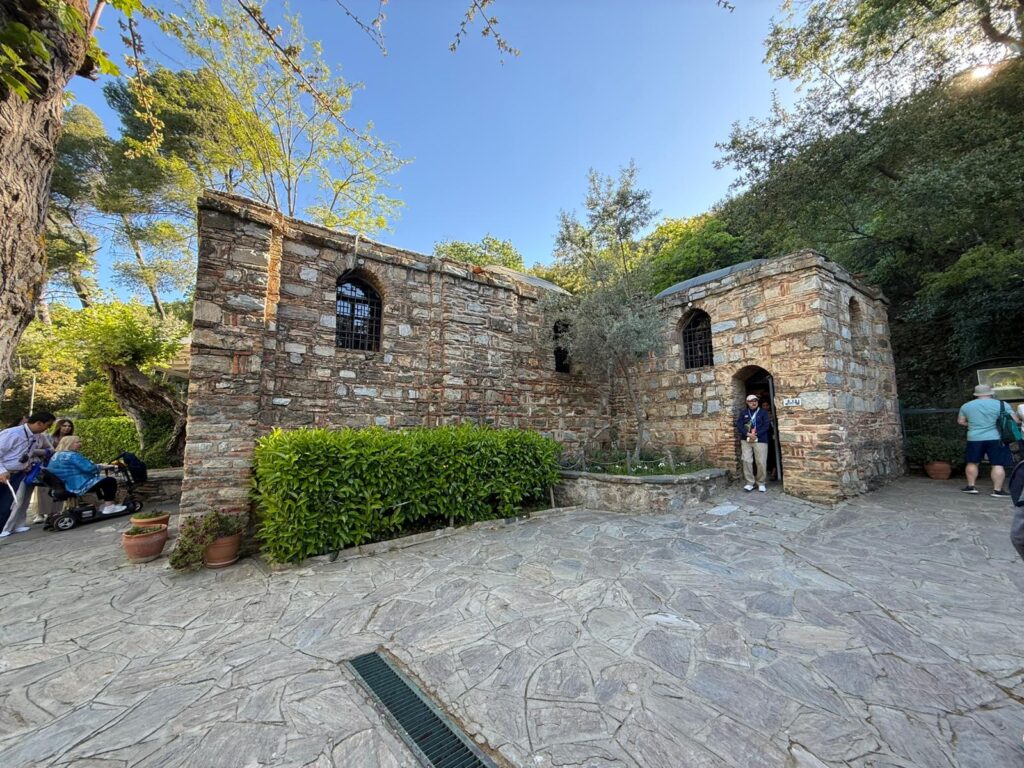
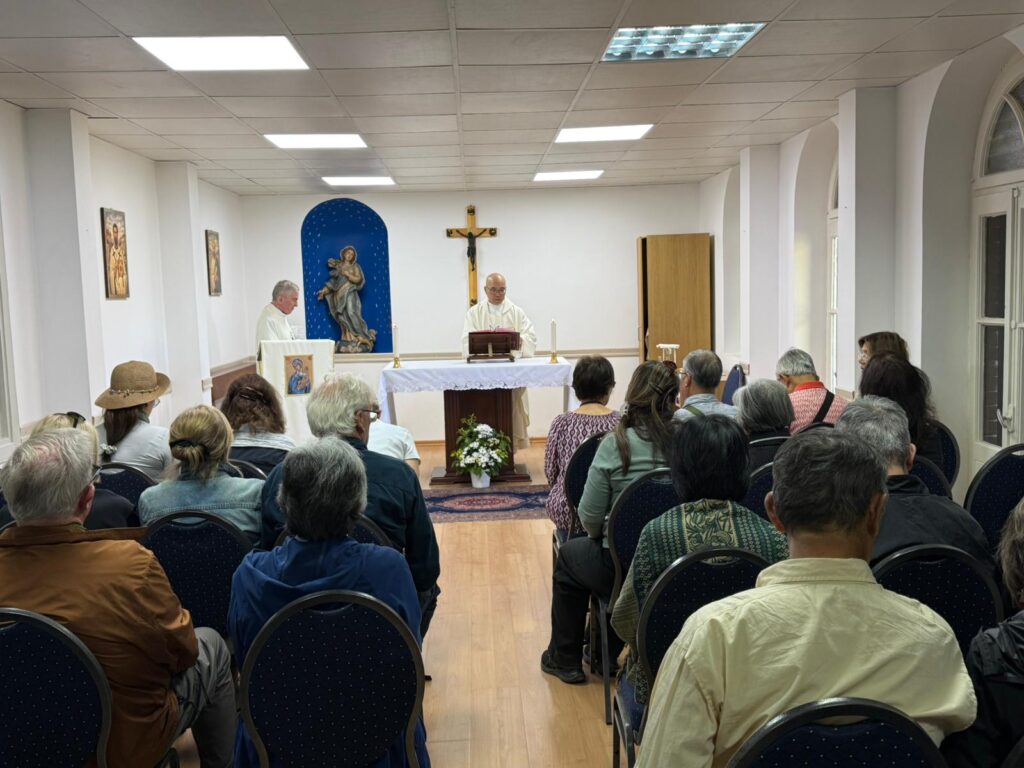
    At a time when Christians were still persecuted, the location—removed from the city—would have offered some protection. The foundations of the building date back to the first century, and we were very blessed to celebrate Mass in this location.

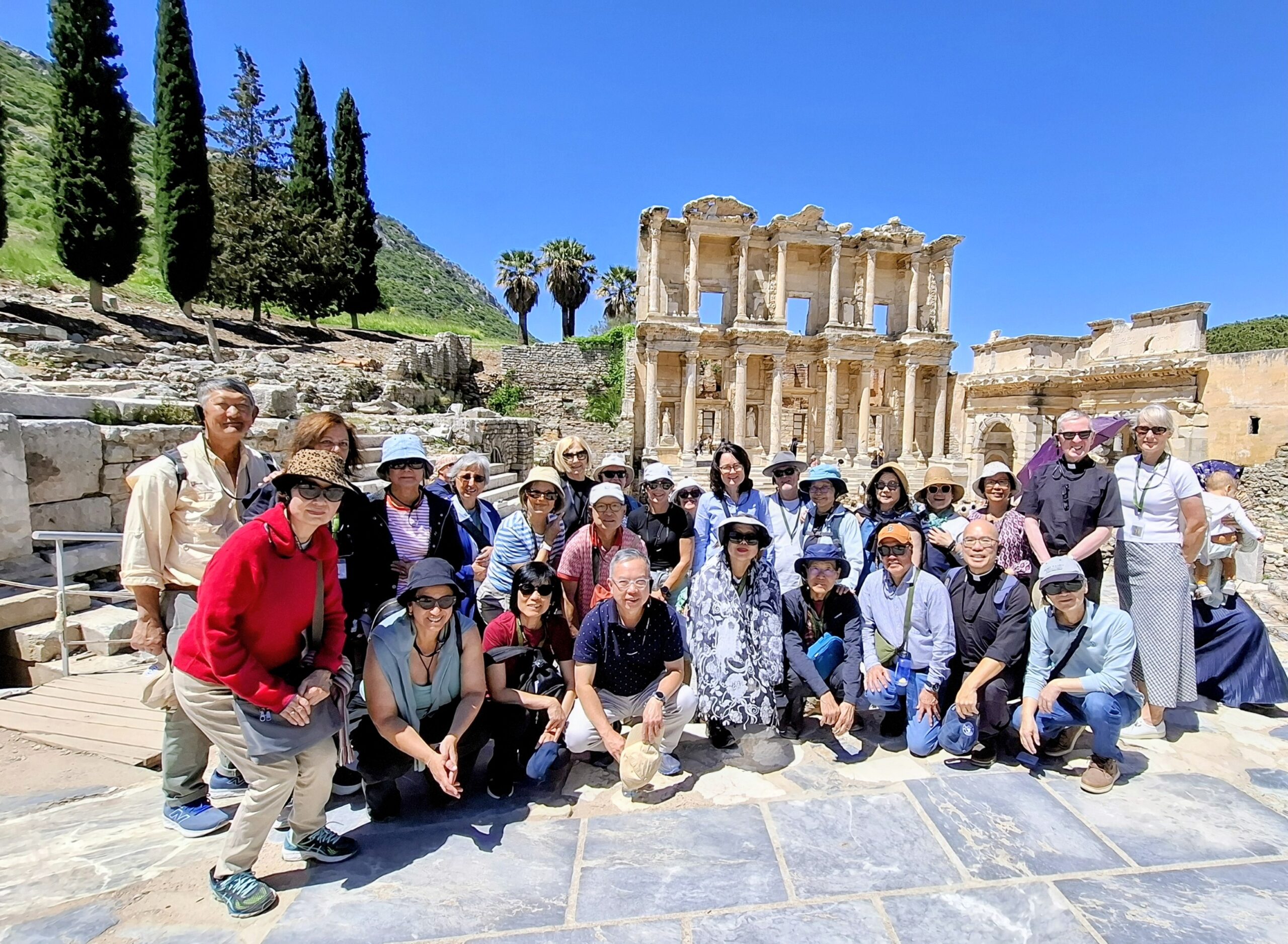
    From there, we proceeded to the ancient ruins of Ephesus, one of the Mediterranean’s best-preserved Greco-Roman cities. Founded in the 10th century BC, it later became a significant Roman port city, home to landmarks such as the Library of Celsus, the Great Theatre, and the Temple of Artemis—one of the Seven Wonders of the Ancient World.

    The church of Ephesus, was planted by St Paul and is one of the seven churches mentioned in the book of Revelations.
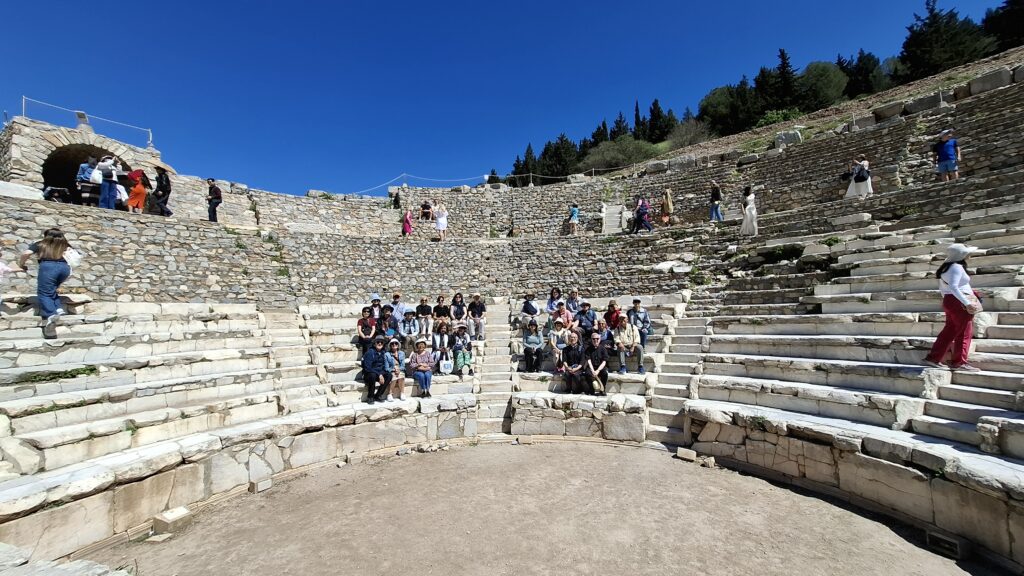
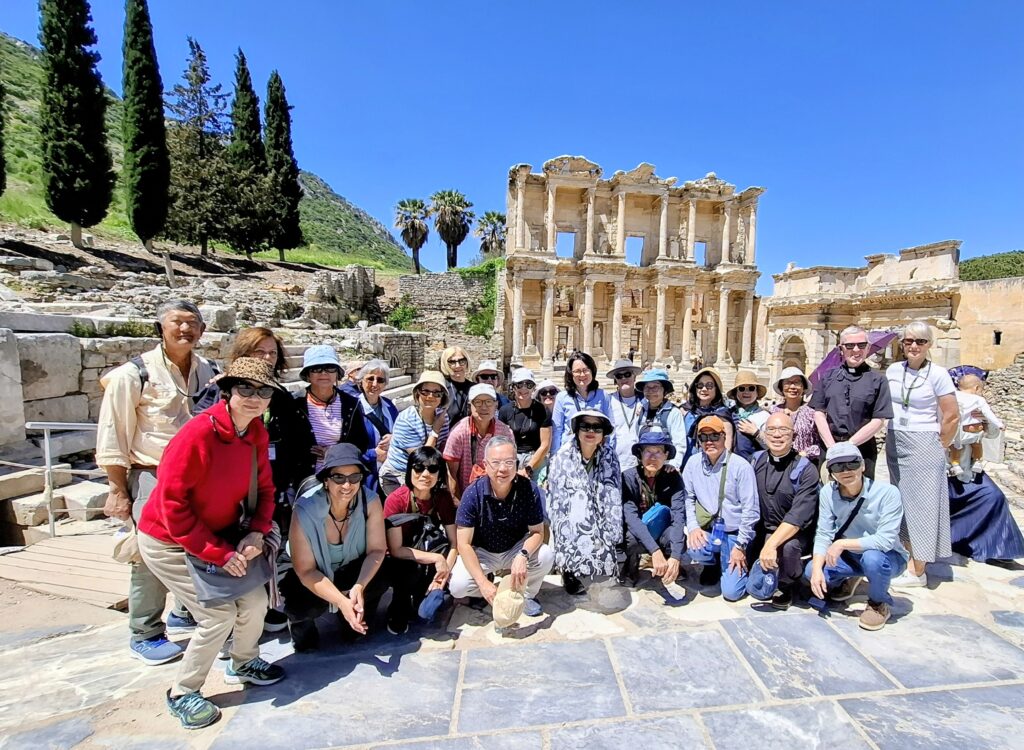
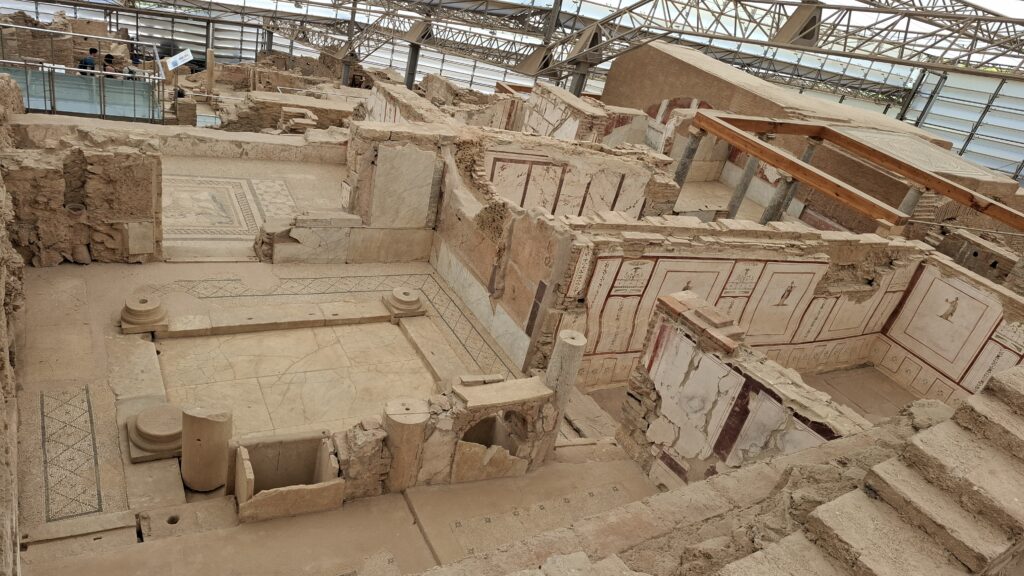
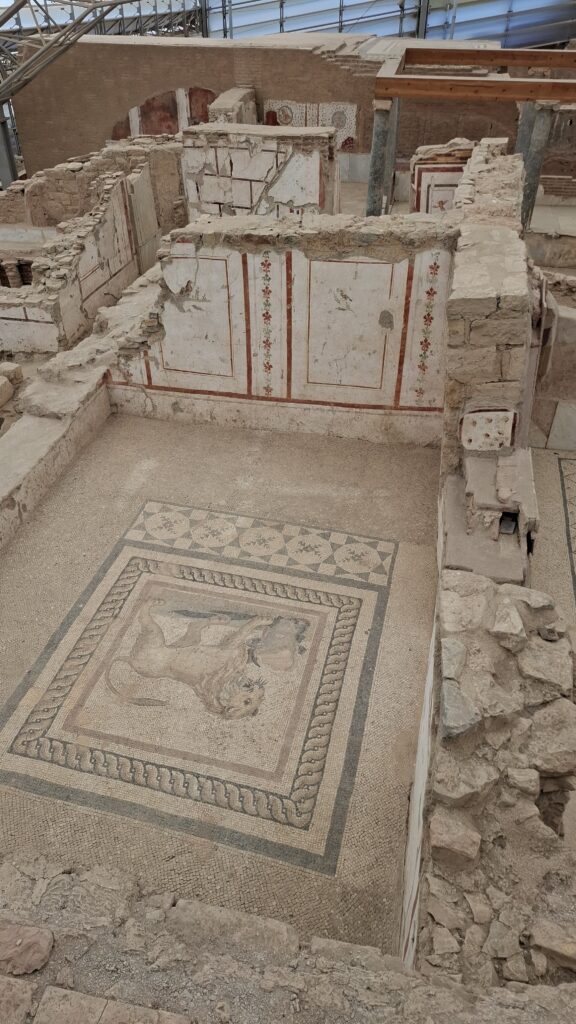
    Exploring the city gave insight into daily life at the time. We saw everything from public bathhouses and toilet blocks to the terrace homes of wealthy families, where walls with intricate painted designs and marble flooring have been preserved.
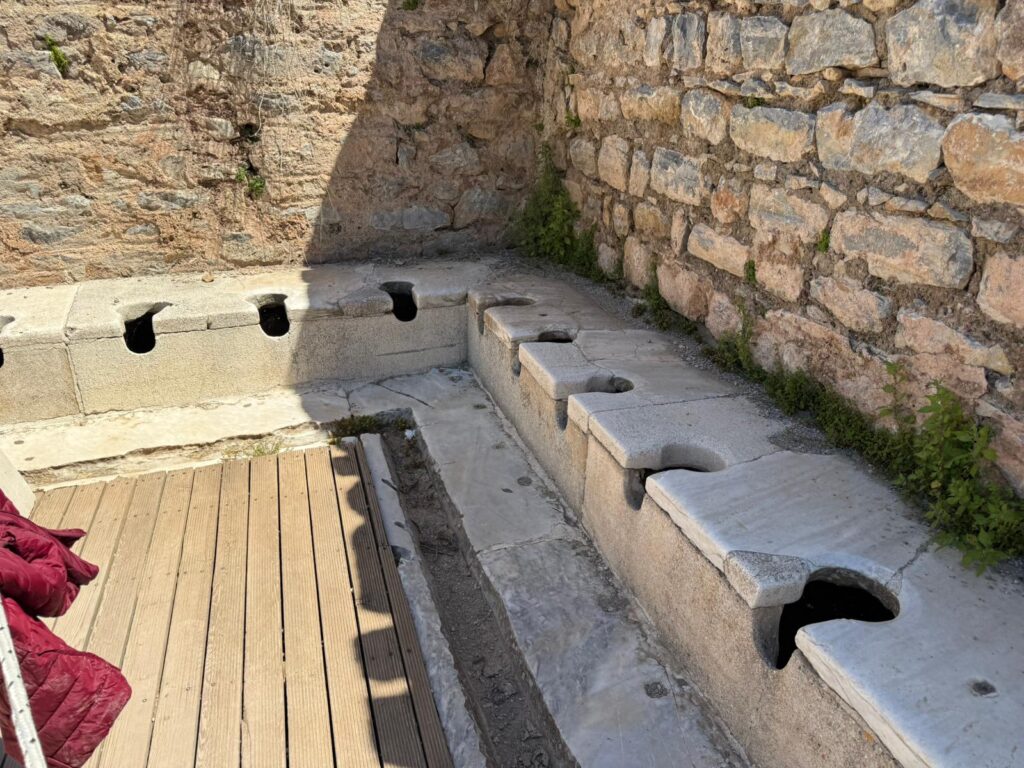
    Roman life in Ephesus appeared highly organised and advanced, and likely quite comfortable for many.

    In this context, Paul and his followers were truly courageous when preaching the good news. Acts 19:28–41 records the near riot that occurred when Saint Paul and his disciples preached Jesus as the one true God in the Grand Theatre, threatening the livelihood of silversmiths who made items for the worship of the Roman god Artemis. It made me think that perhaps I need a bit of extra courage to share my faith with others in our comfortable modern world.
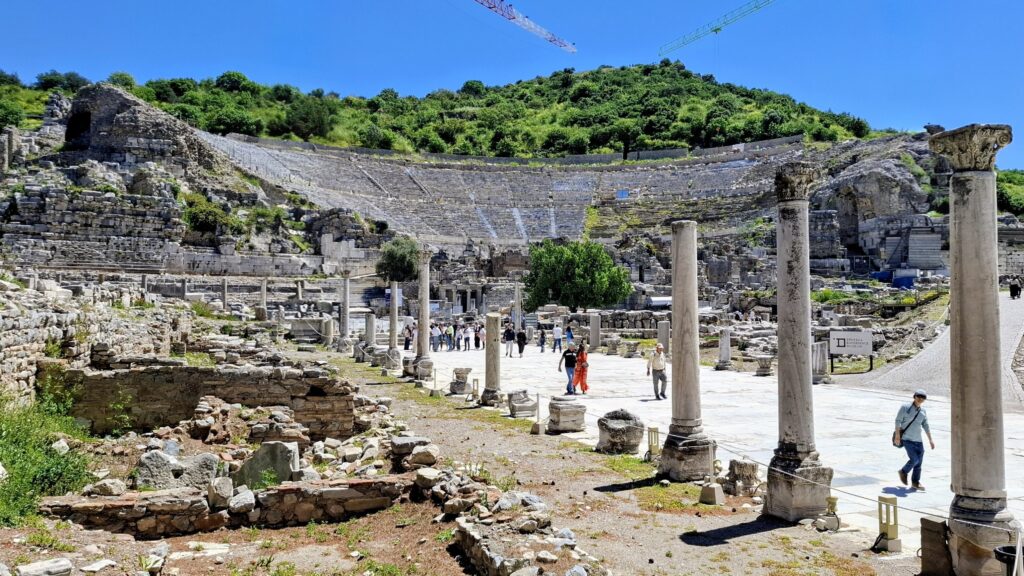
    Ephesus also remained important in later Church history. The Council of Ephesus was held here in 431 AD
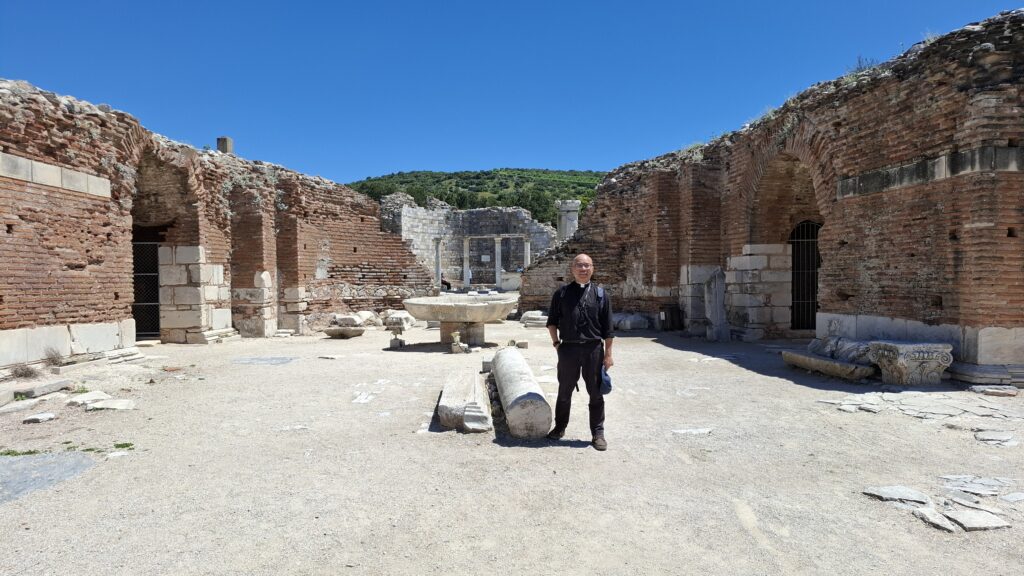

    This Council helped clarify an essential Catholic doctrine: Jesus Christ is truly God and truly man, united in one Person, so that worship and faith are not divided into separate “divine” and “human” nature in Christ. In addition, the Council confirmed the title of Mary as the Mother of God  thus, establishing an extraordinary theological relationship between Mary and Christ.

    Mary has always been strongly linked to Ephesus through the decision of the council.

    Finally, we visited the remains of the 6th-century Basilica of St John, built over what is believed to be the tomb of Saint John the Evangelist.
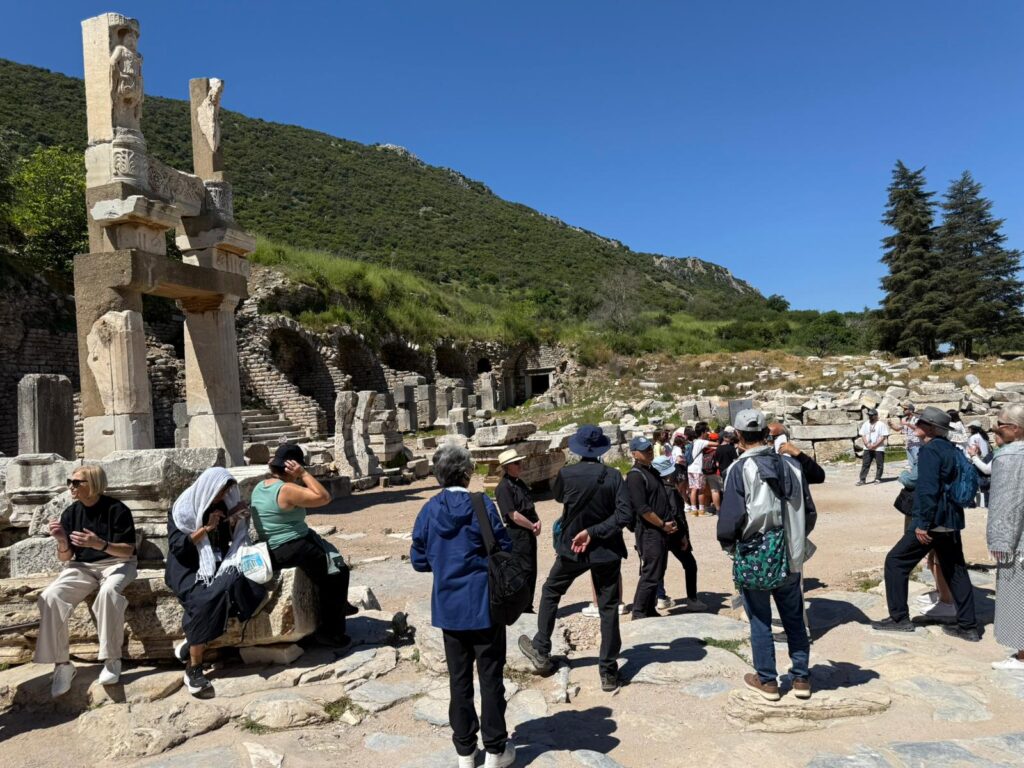
    A very full and rich day.


    Contributed by Anne Loughnan , St. Benedict’s , Burwood, Victoria
  • Day 3, Kalambaka and Meteora

    Day 3, Kalambaka and Meteora

    A Landscape That Teaches the Soul

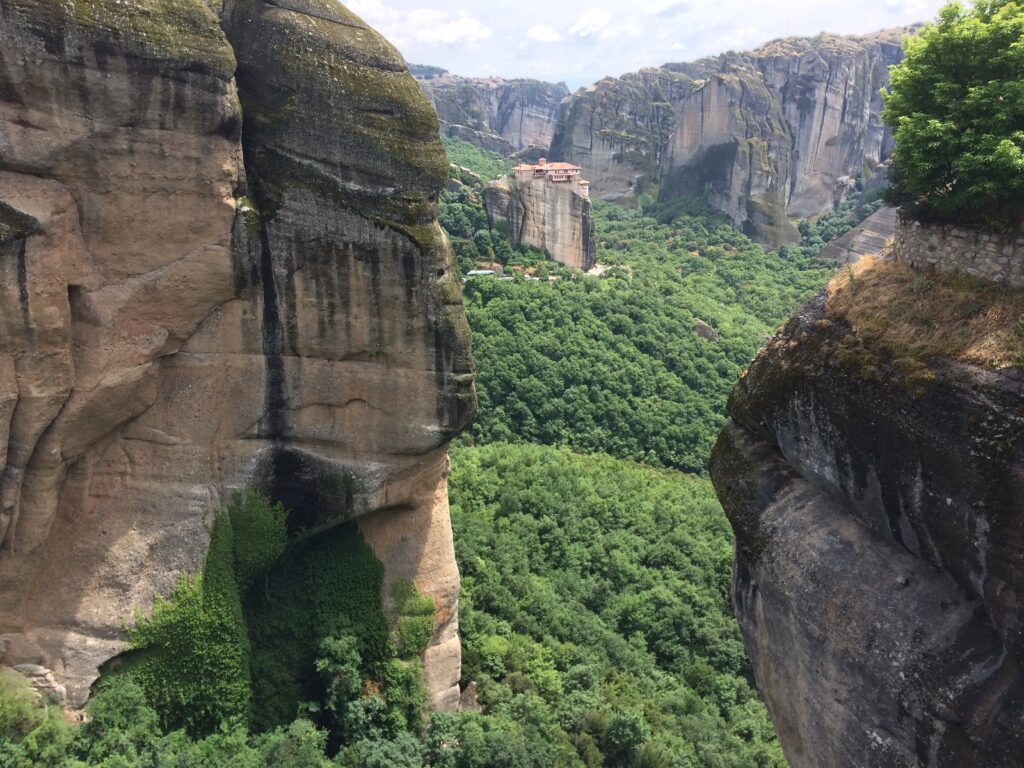
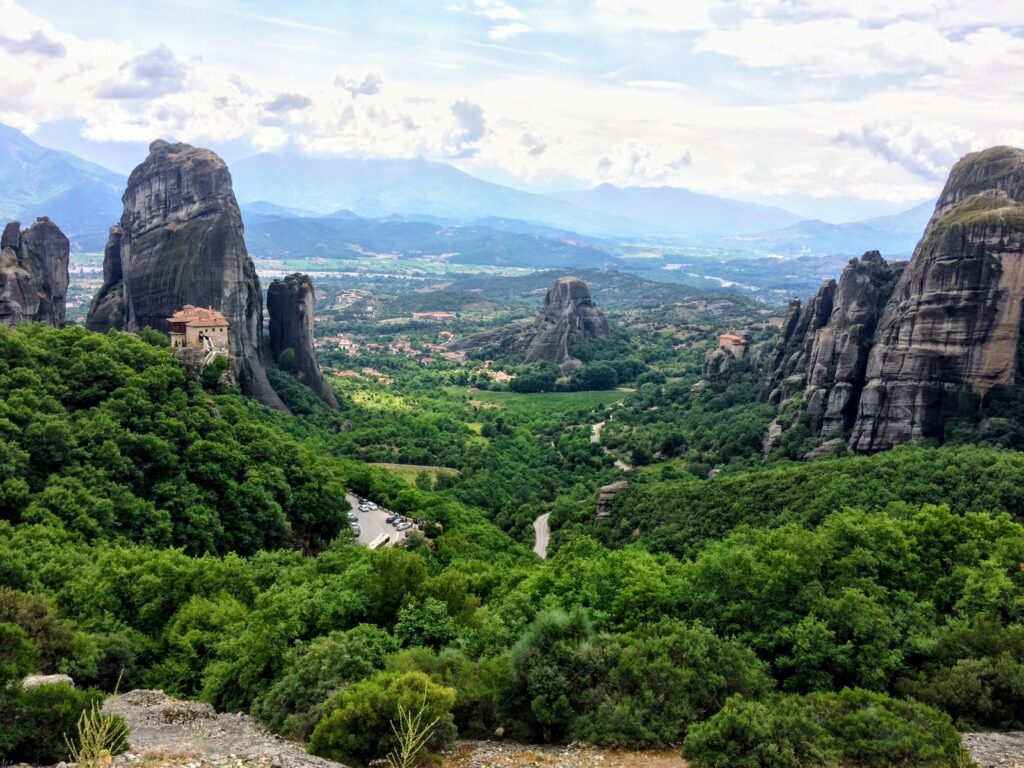
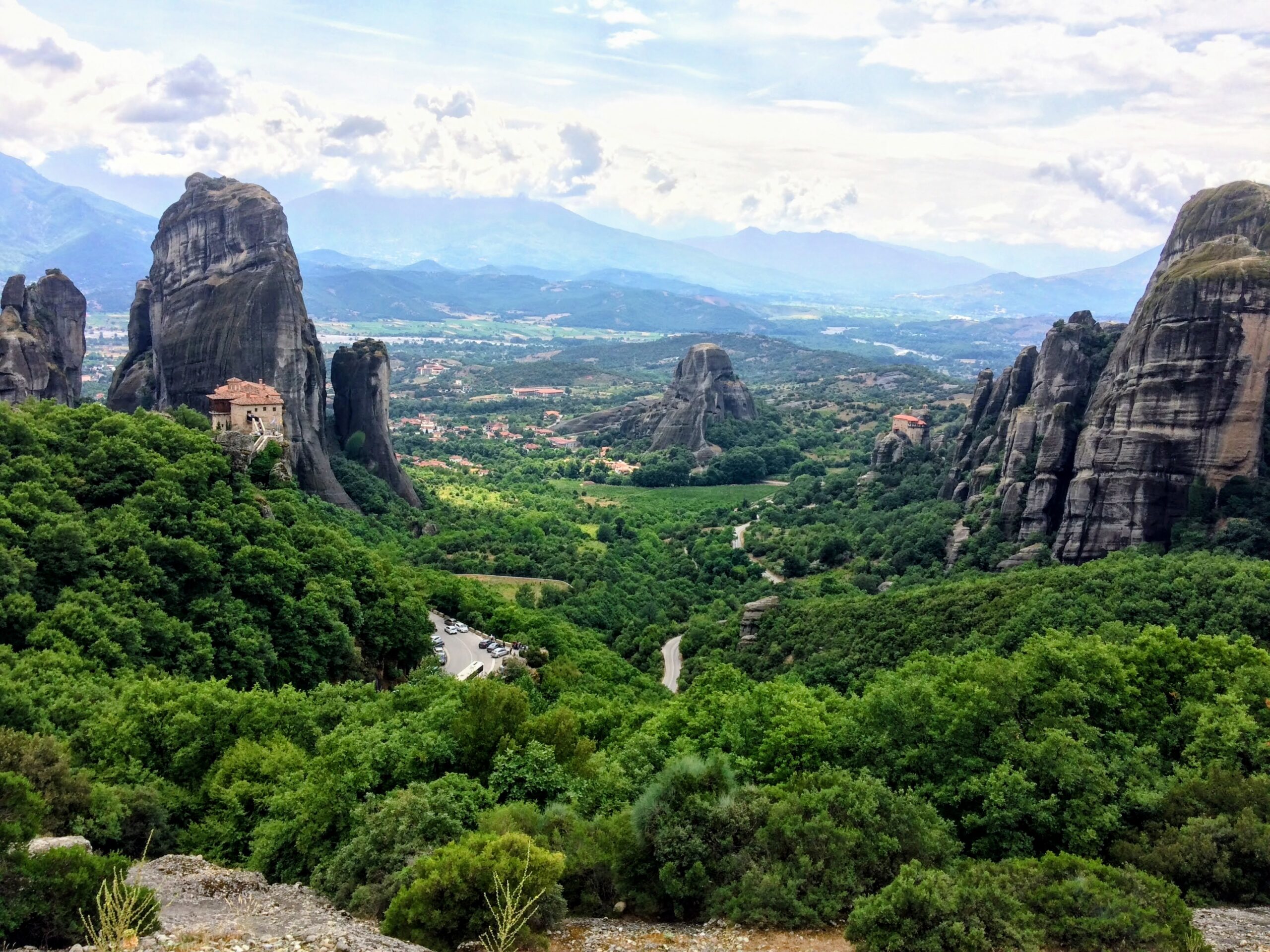
    Pilgrimage has a way of slowing the heart so it can listen. As our journey in the footsteps of St Paul brought us toward Kalambaka, the land itself began to speak. The Thessalian plain stretched wide and quiet, and then—almost without warning—the stone pillars of Meteora rose before us like ancient watchmen. Their presence is startling, but not intimidating. They invite contemplation.

    St Paul never climbed these cliffs, yet the spiritual longing that shaped Meteora echoes the same longing that drove him across Greece. His mission was carried out in cities and marketplaces; the monks who later came here sought silence and seclusion. But both were responding to the same call: to draw nearer .

    Meteora: Suspended in Air

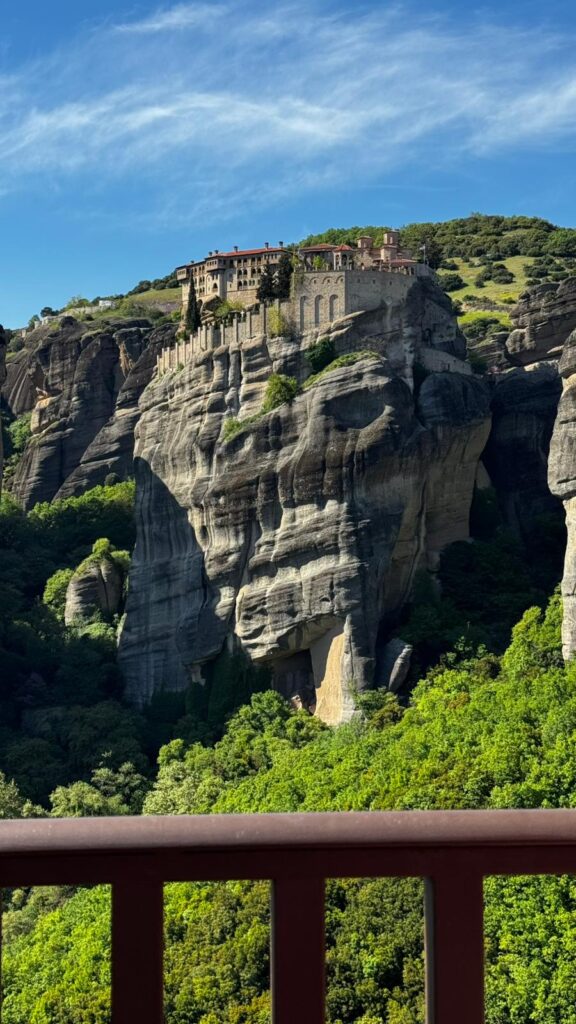
    The ascent into Meteora is more than a climb; it is a lesson in theology. The cliffs themselves seem to reach for heaven, as though creation is participating in prayer. The early hermits who settled here in the 11th century understood this instinctively. They sought a place where the noise of the world could not follow, where the soul could breathe.

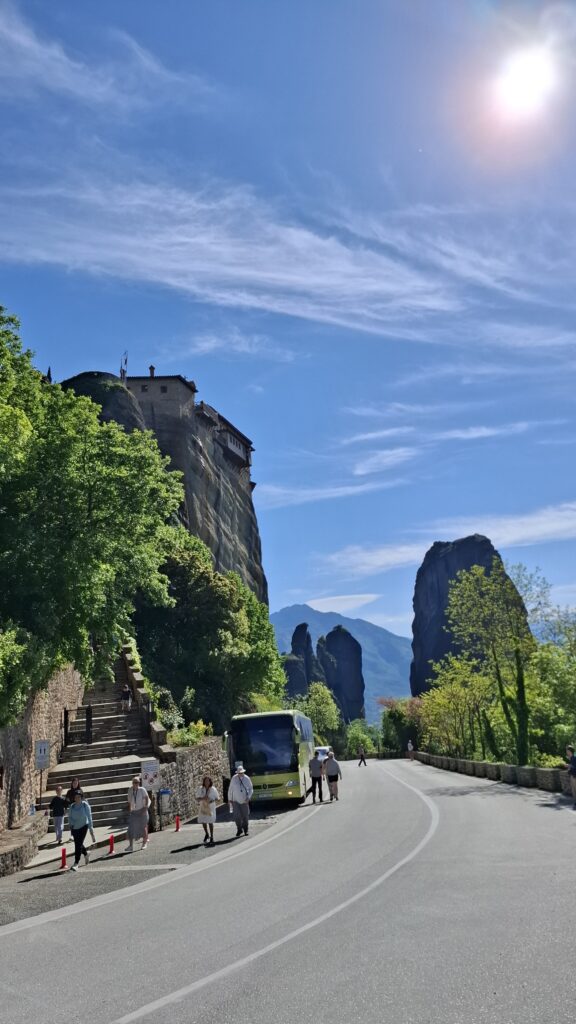
    Every stone, every stairway, every narrow bridge reflects the monastic conviction that the journey to God requires effort, humility, and perseverance.

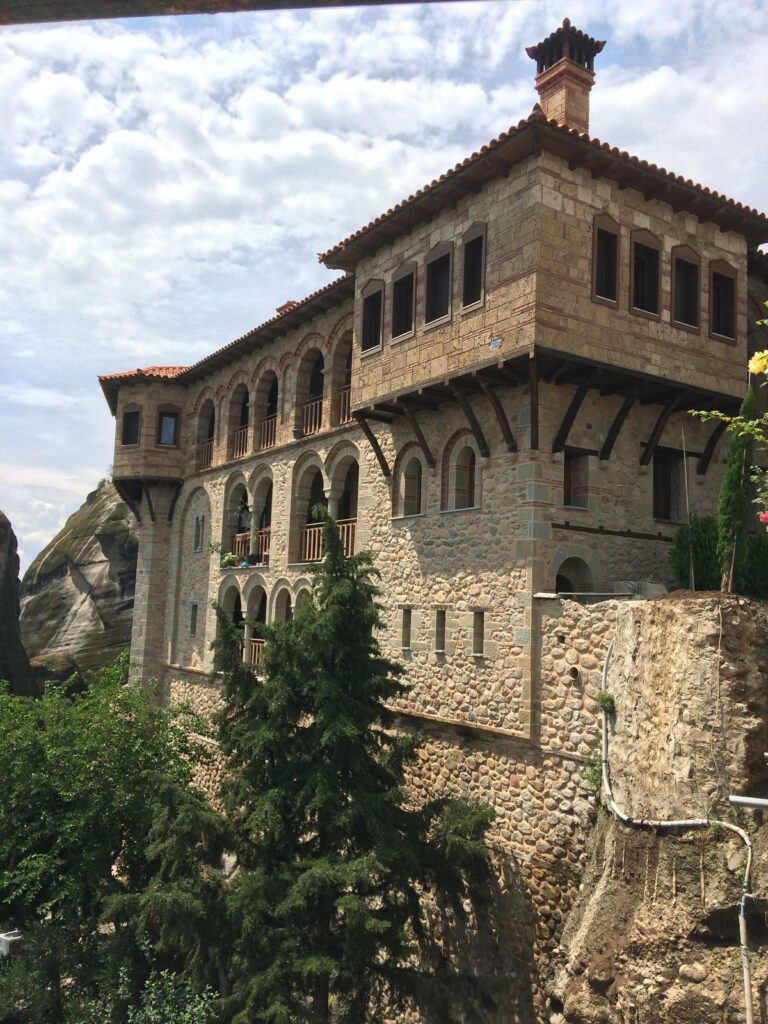
    Approaching the Monastery of St Barbara and St Stephen feels like stepping into a suspended moment. Perched delicately on its rock, it seems almost weightless. The bridge leading to it requires a small act of trust, a reminder that faith often begins with a single step.

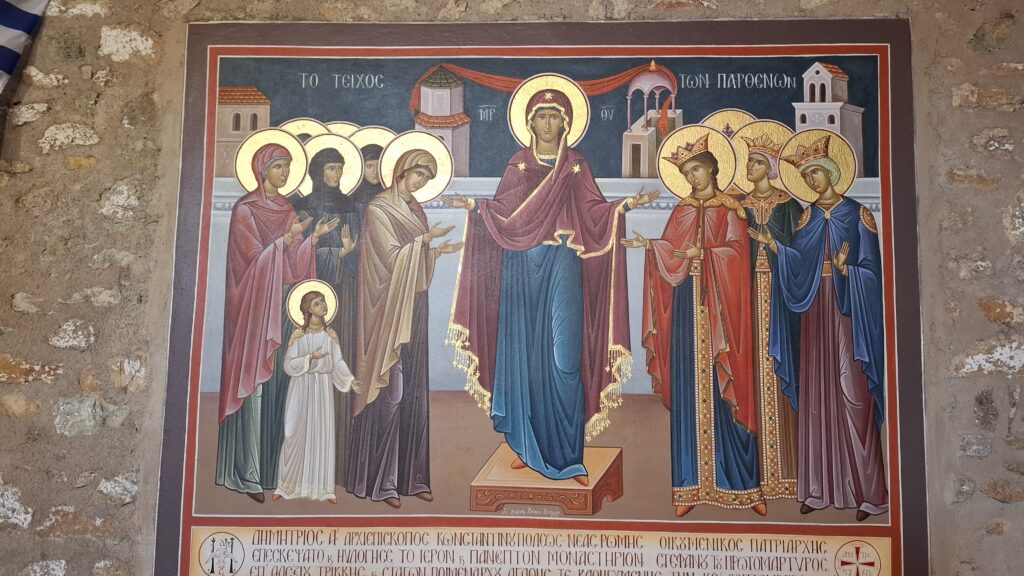
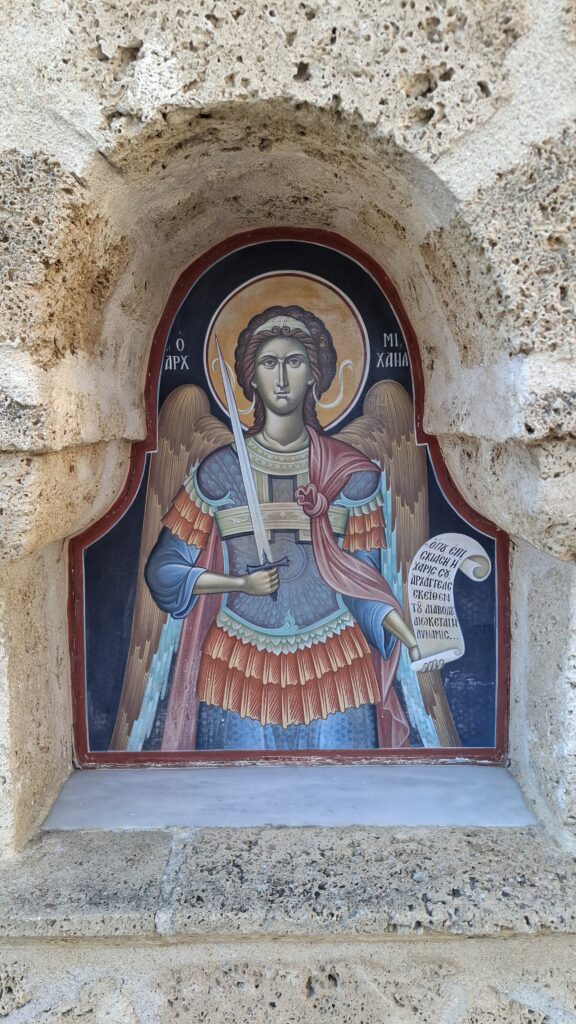
    Inside, the icons and frescoes draw the heart into prayer. Their colors, softened by time, still radiate the beauty of the Gospel. The nuns who serve here embody a quiet strength—an echo of the women who supported Paul’s ministry in Philippi, Thessalonica, and Corinth.

    Such experience reflects St Paul’s words to the Romans: “For since the creation of the world God’s invisible qualities… have been clearly seen.”

    The monasteries openness mirrors Paul’s pastoral heart. He traveled tirelessly, not to escape the world but to transform it. St Stephen’s reminds us that holiness is not withdrawal alone; it is service, welcome, and witness.

    Faith That Endures: Leaving Meteora, one carries more than memories. The stones themselves seem to imprint something on the soul. They stand as a testament to endurance—endurance of faith, of prayer, of the human longing for God.

    Walking in the footsteps of St Paul through this region in Greece reveals a profound truth: the Christian journey takes many forms. Paul preached in bustling cities; monks prayed in silent caves. Yet both paths lead toward the same horizon—Christ.

    Meteora teaches us pilgrims that faith is both ascent and descent:

    • ascent toward God in prayer,
    • descent into the world in love.

    As the sun sets behind the cliffs and Kalambaka settles into evening, the heart understands why we as pilgrims have come here. Meteora does not simply show us where others have walked; it invites us to walk more faithfully ourselves.


    Reflection by Josette Charles, Adelaide, South Australia.

  • Day 1 Corinth, Greece

    Day 1 Corinth, Greece

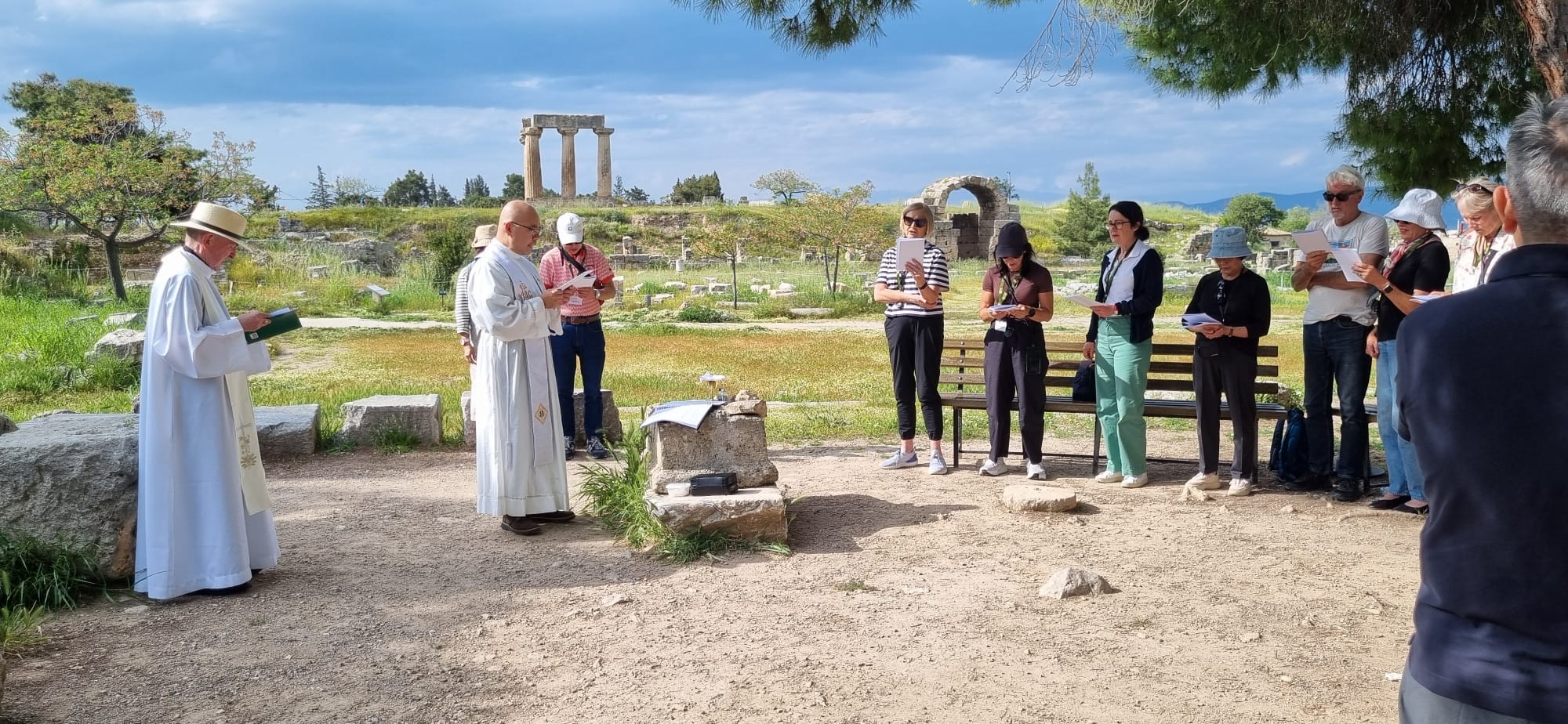
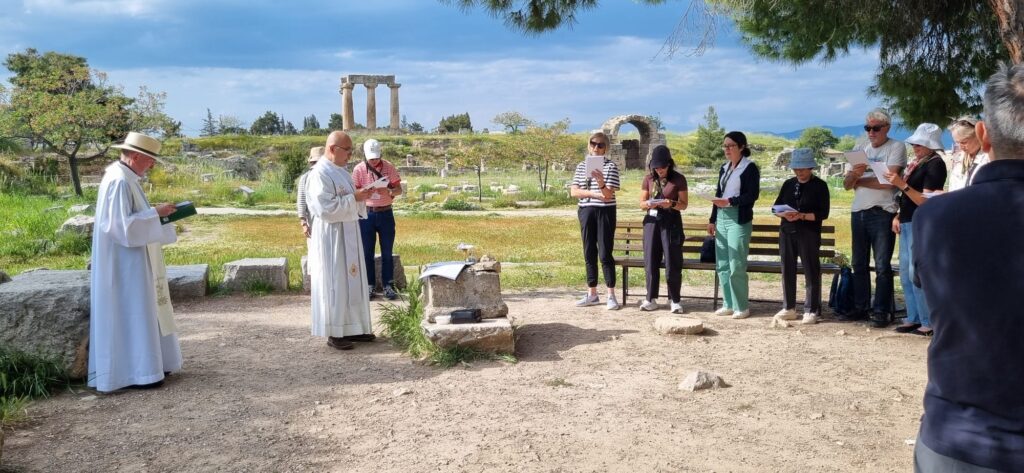
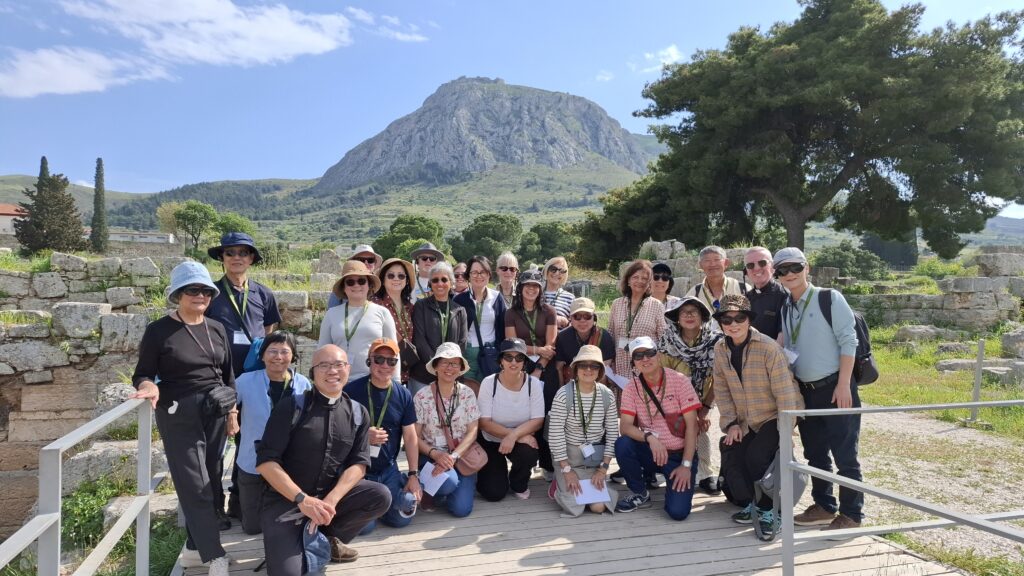
    After an eventful start from Melbourne on 20th April with delayed departure and missed flights from Istanbul we arrived on 22nd April when the Bible was brought to life as we started on the pilgrimage to experience the Footsteps of St Paul in Corinth. We walked along a well- used path, reflecting on the tent maker, Paul’s mission for spreading the word about the crucified Christ. Where made stops, imagining where the apostle Paul could have stood, preaching to the people of Corinth living near – what is now ruins- the 6th century BC Temple of Apollo. On the grounds where St Paul once trod, what stood out for us was something St Paul would have done many times when he was in Corinth, the breaking of bread in a shared meal. In the open, upon a small pile of stones,Fr Alex and Fr Chris celebrated mass. The birds in the tree, under which the 26 pilgrims sat, seemed to be calling out the relevance of it all.

    For us, Corinth wasn’t just the landmarks, but the feeling of connection across time. Corinth wasn’t just a destination; it became a reminder of perseverance, courage, and the enduring power of belief. The journey stayed with us long after we left.

    God bless,

    Hock-Hin and Peng-Sim, pilgrims from St Luke the Evangelist, Blackburn south, 22 April 2026

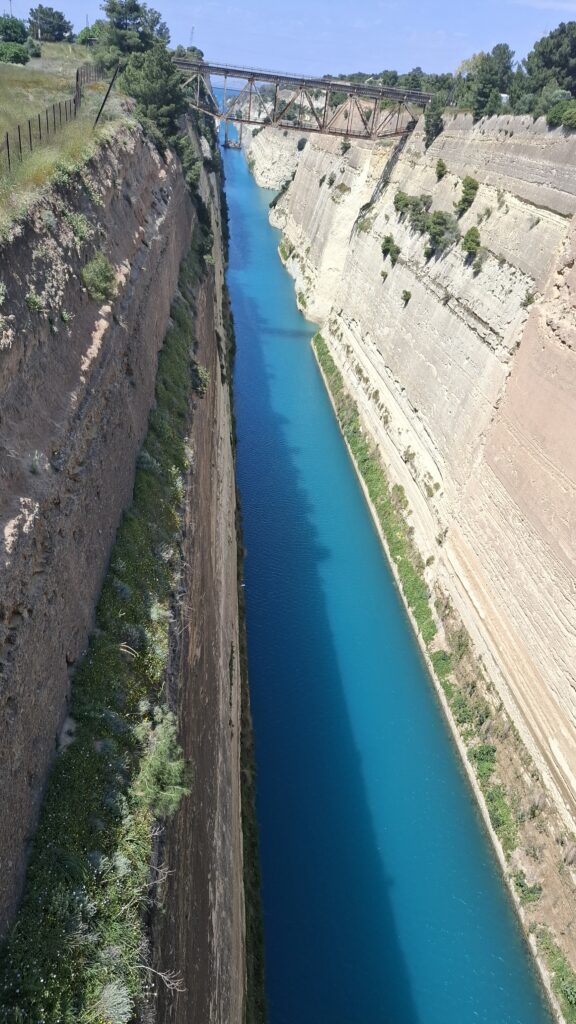
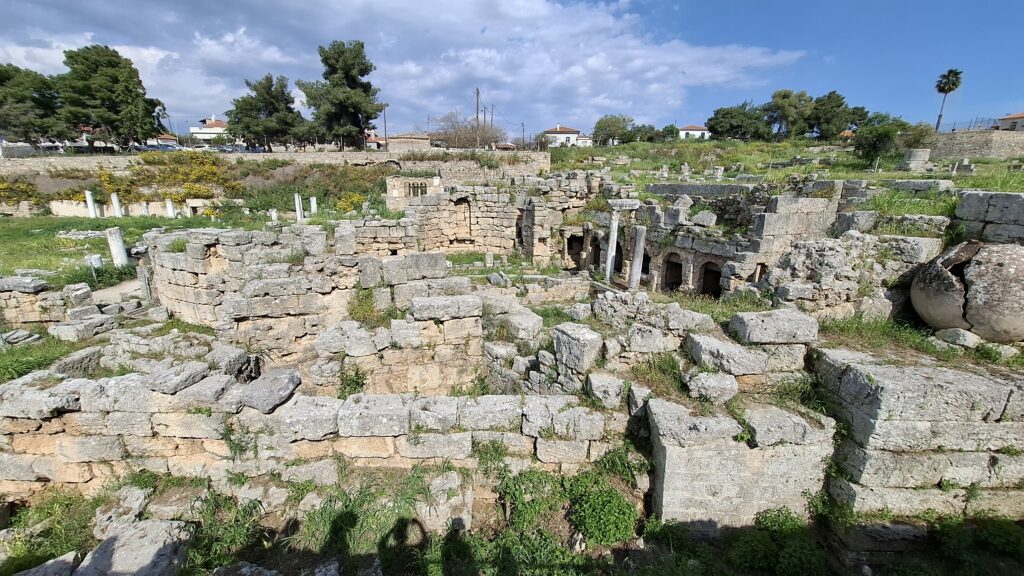
    Photos: Open air mass , the Corinth canal connection Ionian and Aegean seas, the ruins of Down Peirene fountain.

    “Praise be to the God and Father of our Lord Jesus Christ, the Father of compassion and the God of all comfort, who comforts us in all our troubles, so that we can comfort those in any trouble with the comfort we ourselves receive from God.” -2 Corinthians 1:3-4 (NIV)